Bears of the Katmai Backcountry: A Fragile Balance
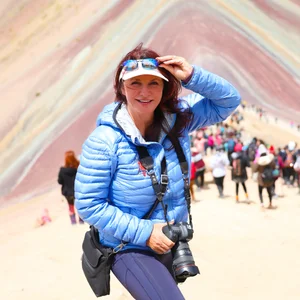
Words & Photographs by Lona Downs
Deep in Alaska’s backcountry, just beyond the quiet edges of Katmai National Park, beauty unfolds in its rawest form.
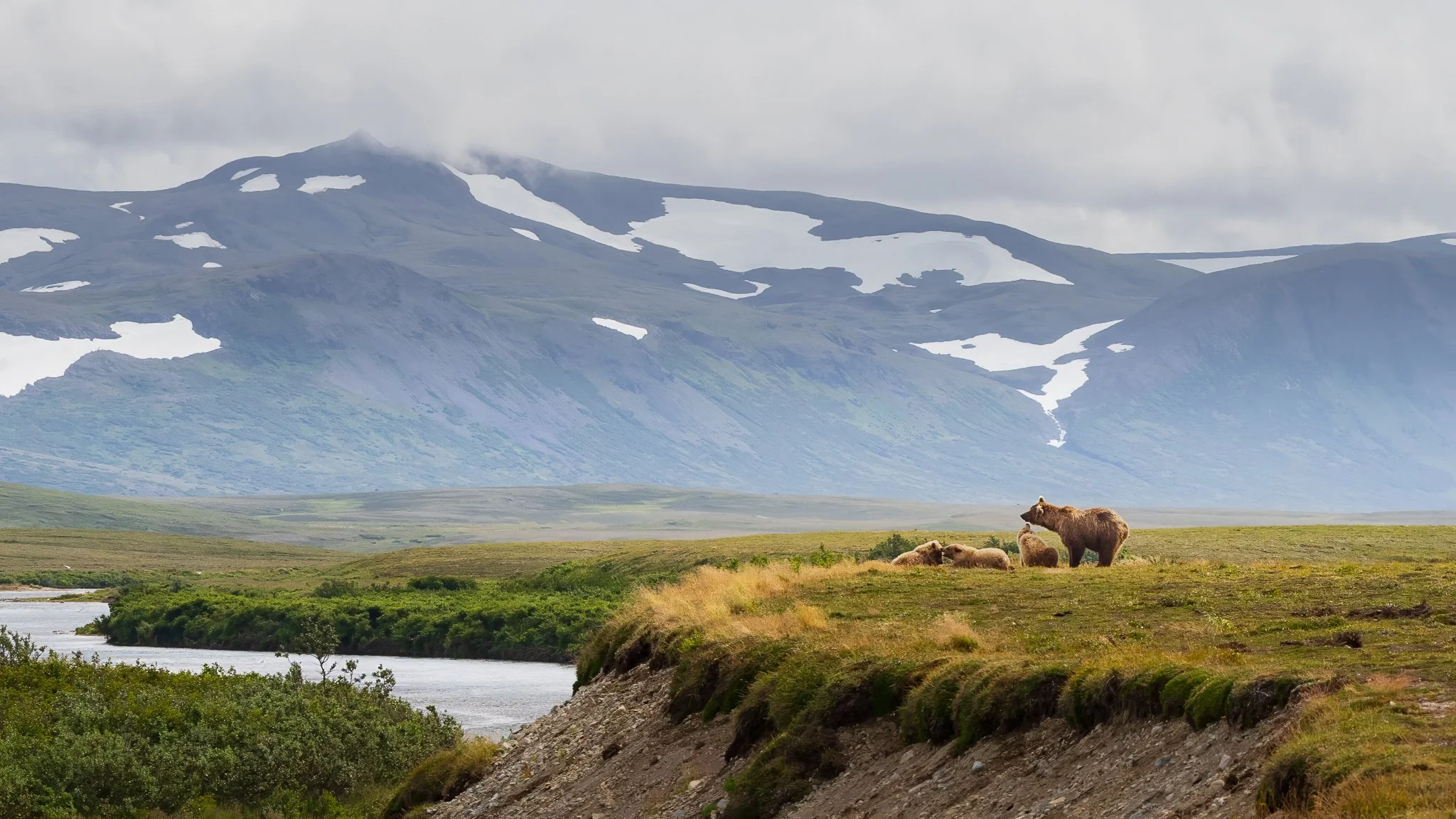
The river noise fades into something deeper—a rhythm older than any of us—and suddenly you’re standing in a world that doesn’t belong to you at all.
Some places remind you how small you are…
and how much still depends on what happens next.
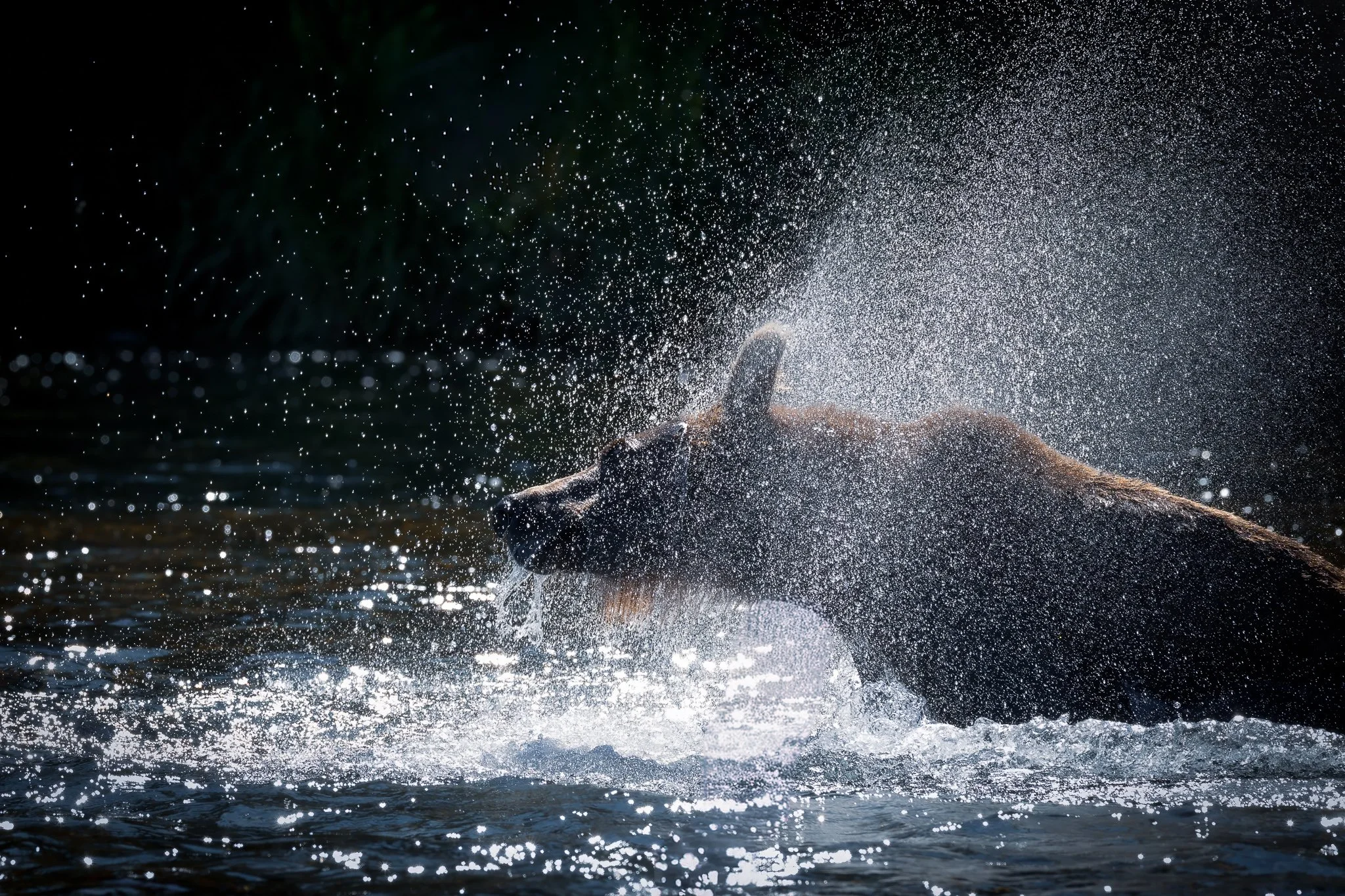
I grew up outside, so I’ve always understood that the wild has its own space and its own rules.
But moments like this bring that truth right to the surface.
Out here, the delicacy of these systems becomes unmistakable—how every salmon run, every stretch of water, every bear depends on a balance that must hold.
And along the river, that balance plays out in real time.
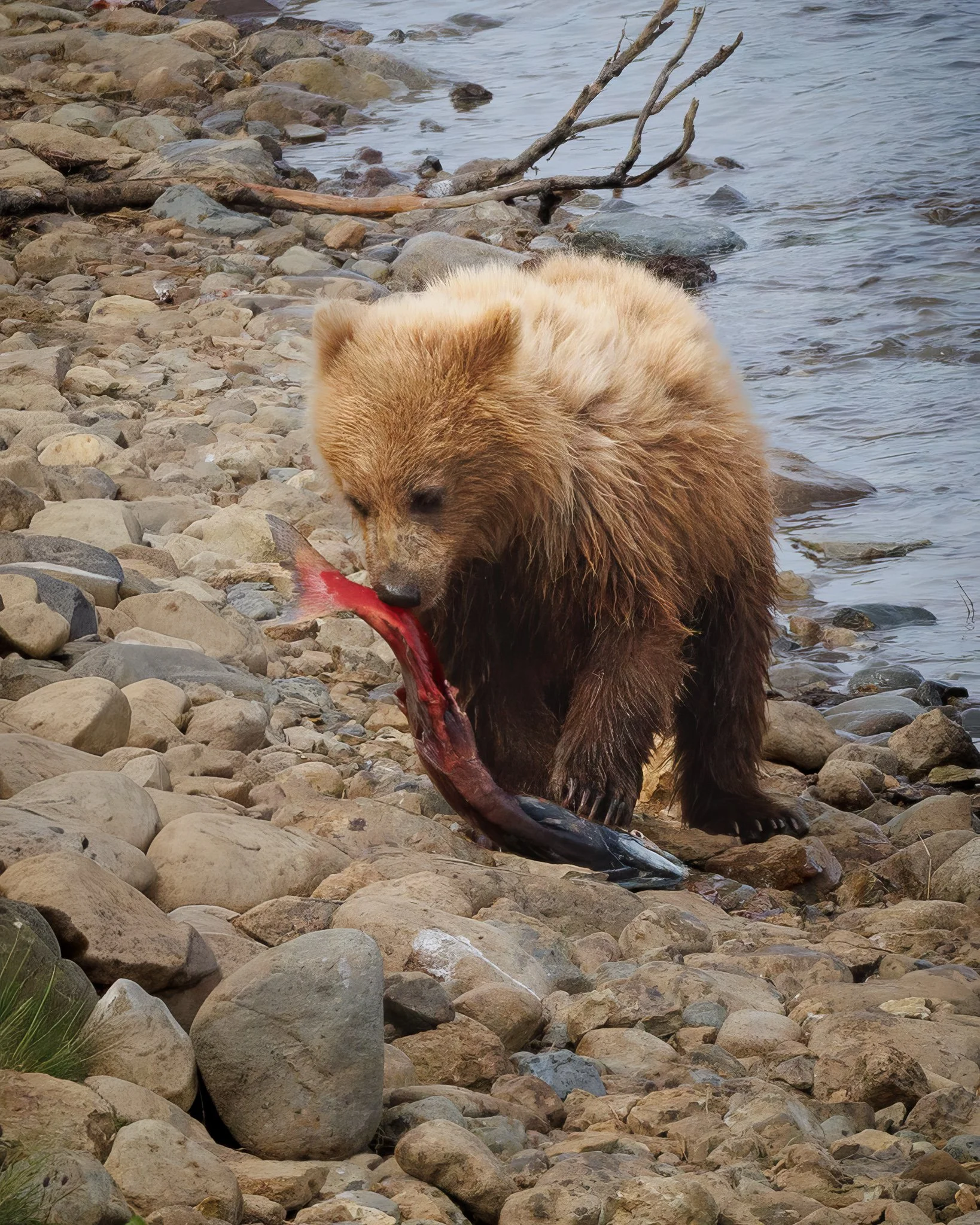
The river comes alive in moments like this.
A rush of movement, instinct, and power—held in perfect balance.
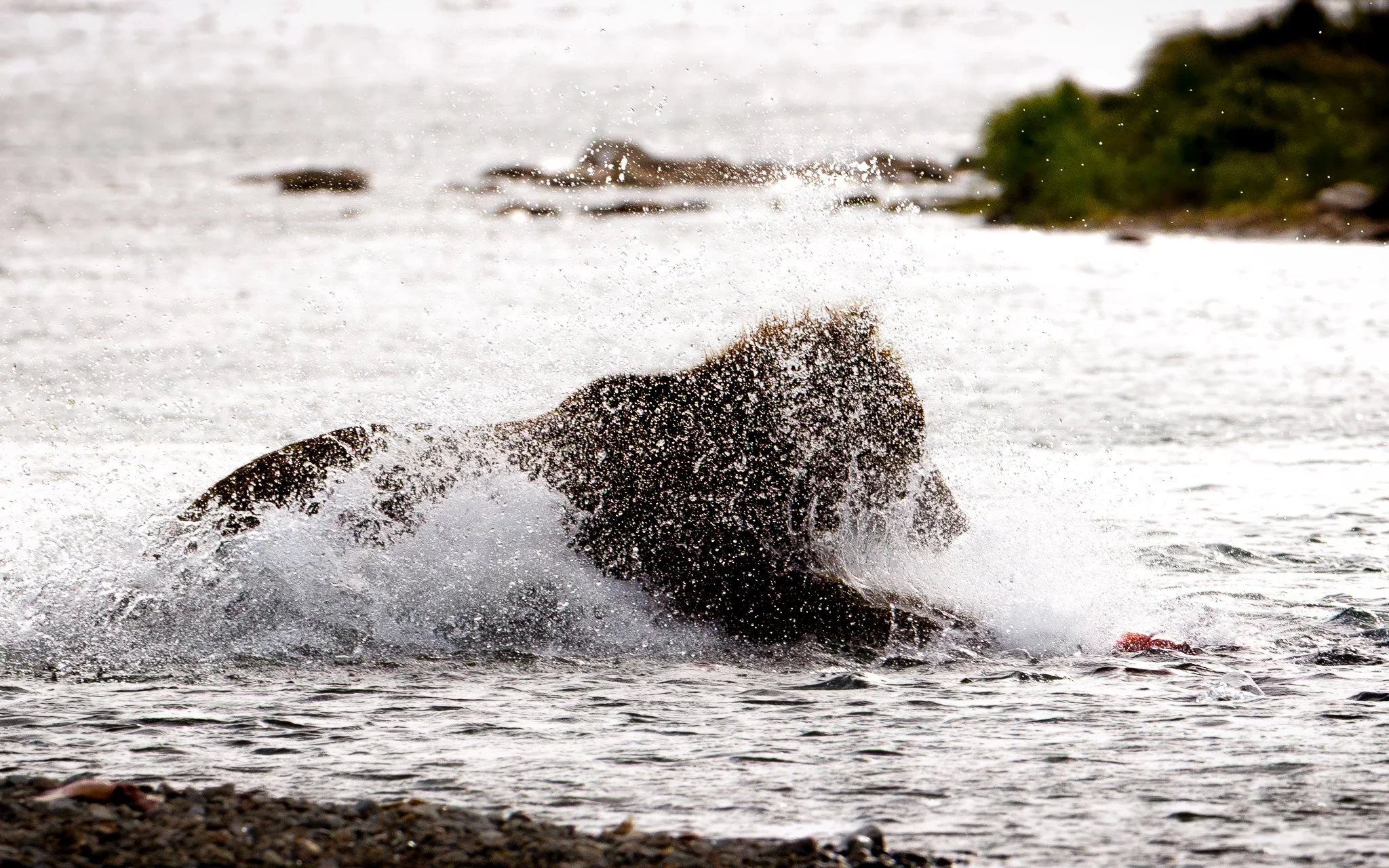
Standing in the middle of it, the weight of that truth settles in as a bear rises from the water with a salmon locked in its jaws, gulls sweeping past in the spray.
You start to feel how much balance it takes—
how thin the thread really is.
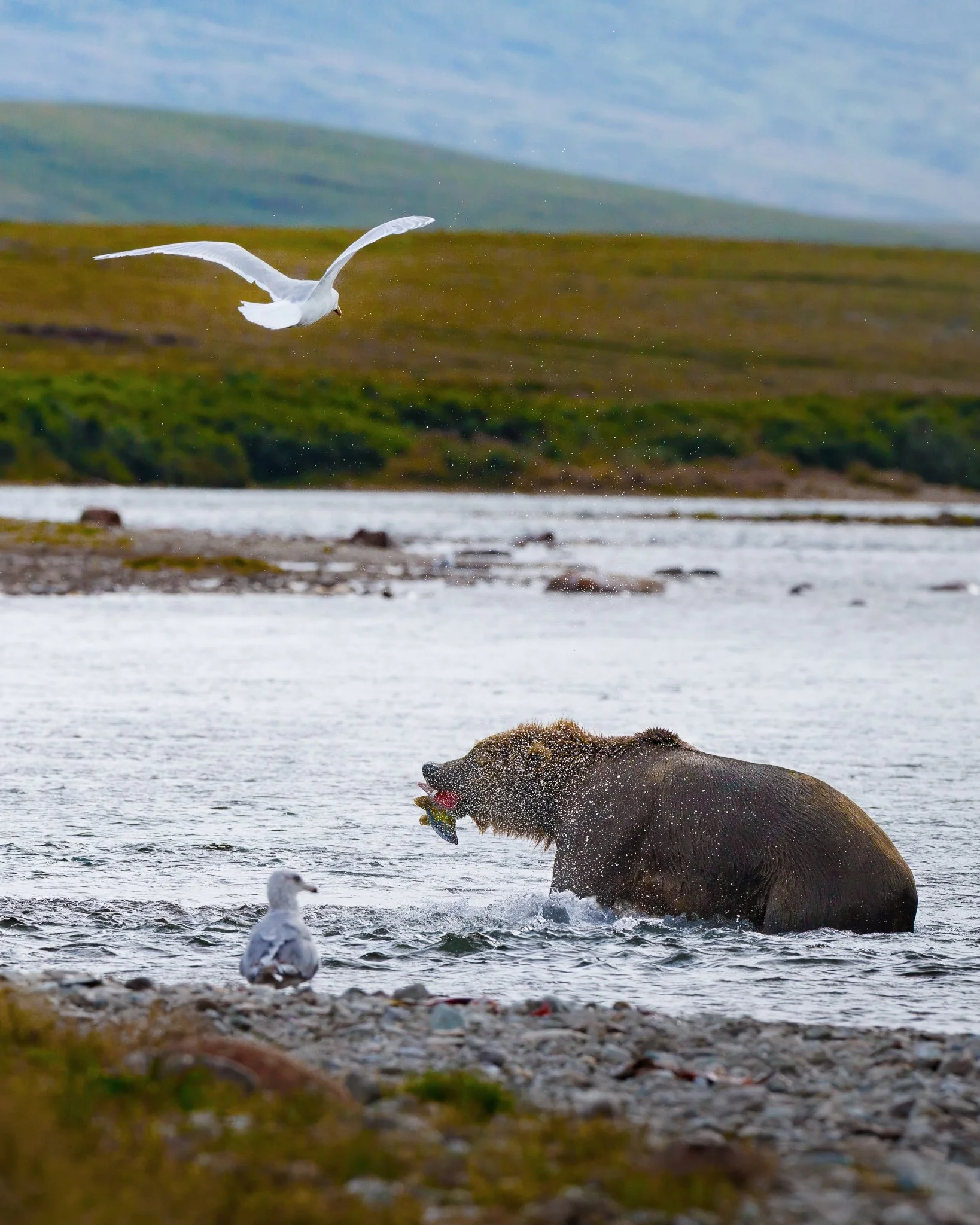
One shift in the river, one season without salmon, one change in how we value these lands—and everything you see here begins to unravel.
In a world built on fragile balances, even a single catch becomes a story of survival.
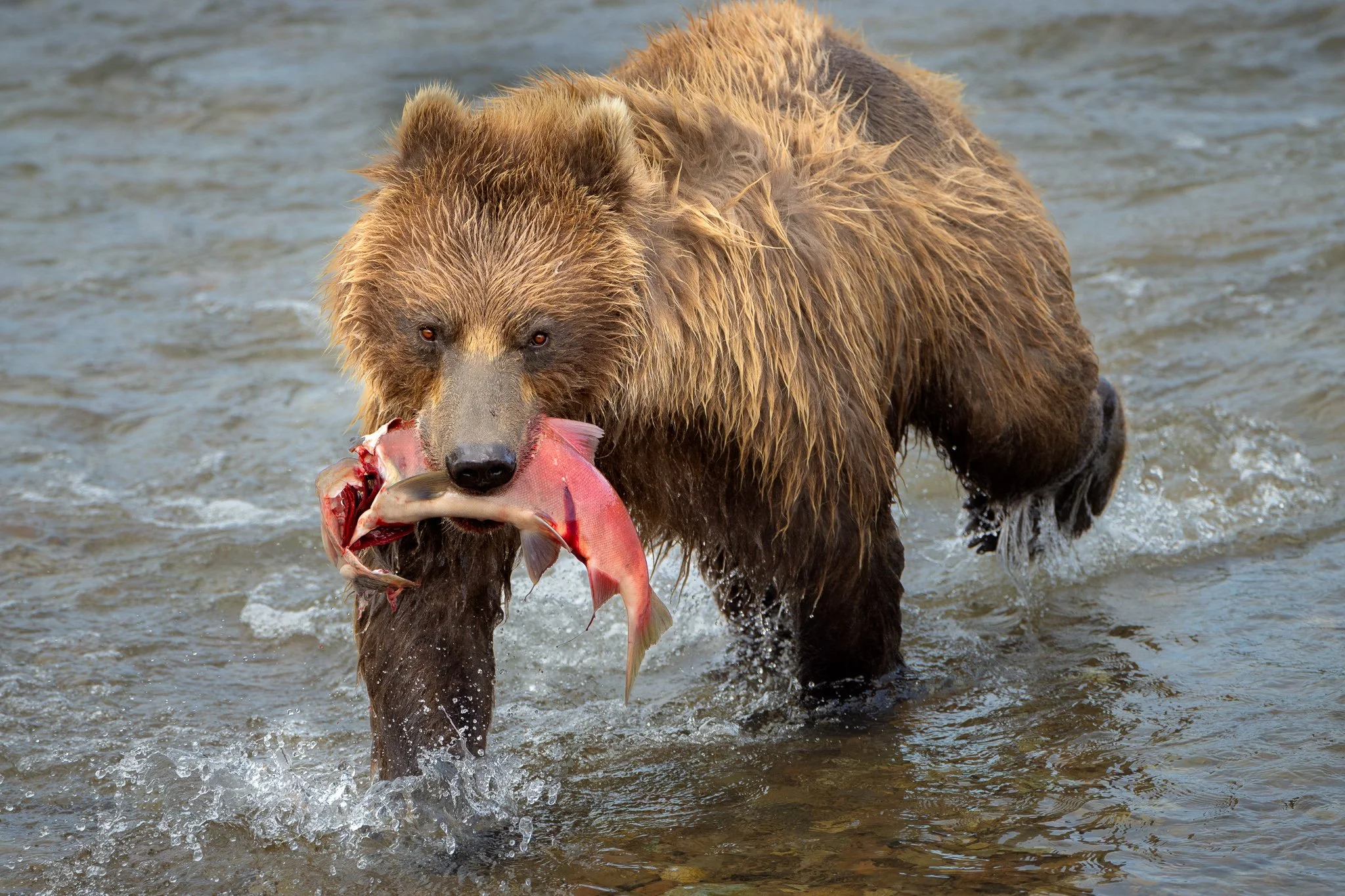
And this is where conservation becomes real.
Not a headline. Not a cause.
Something personal.
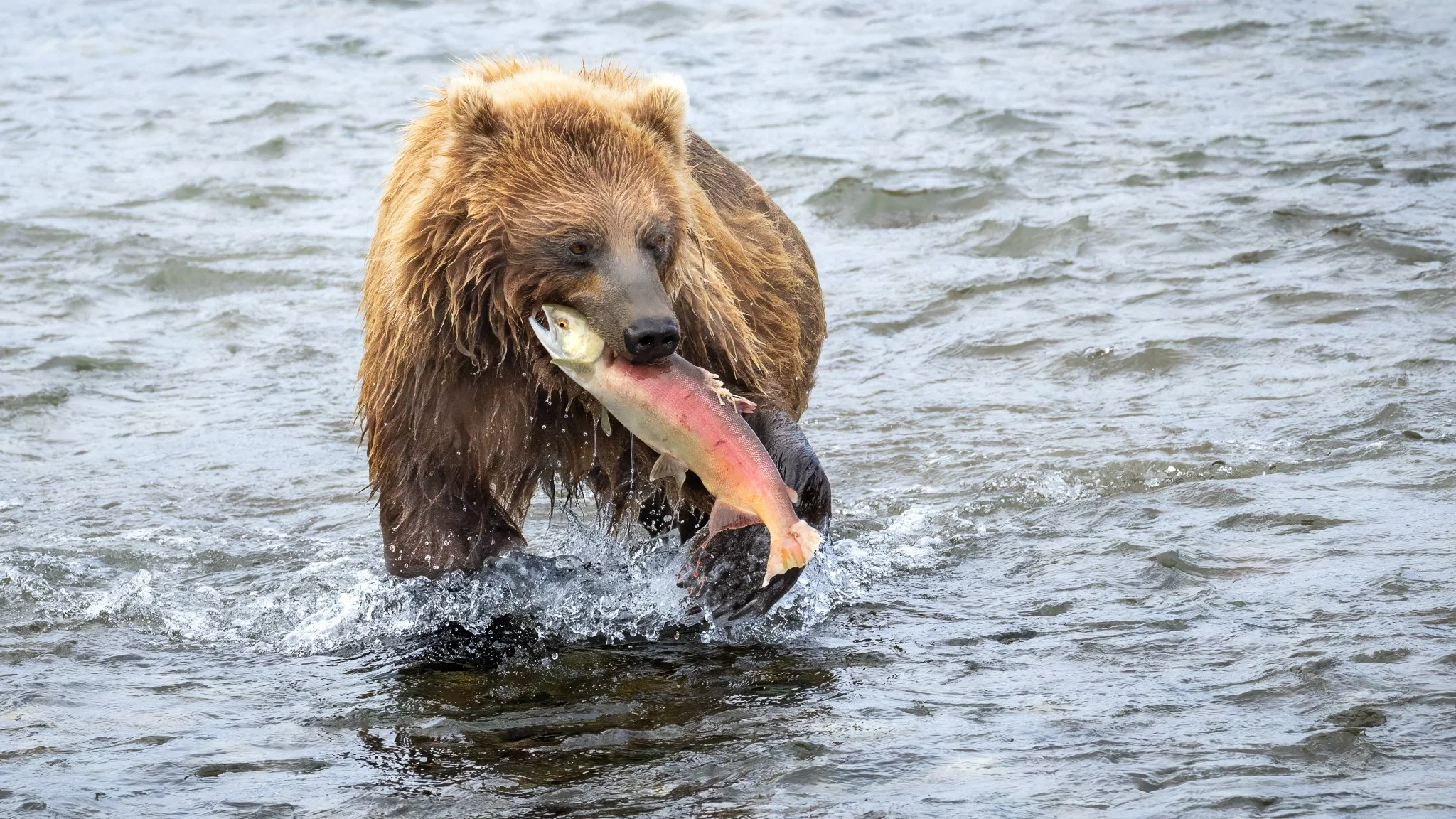
Because this isn’t just about what exists now—
it’s about what continues.
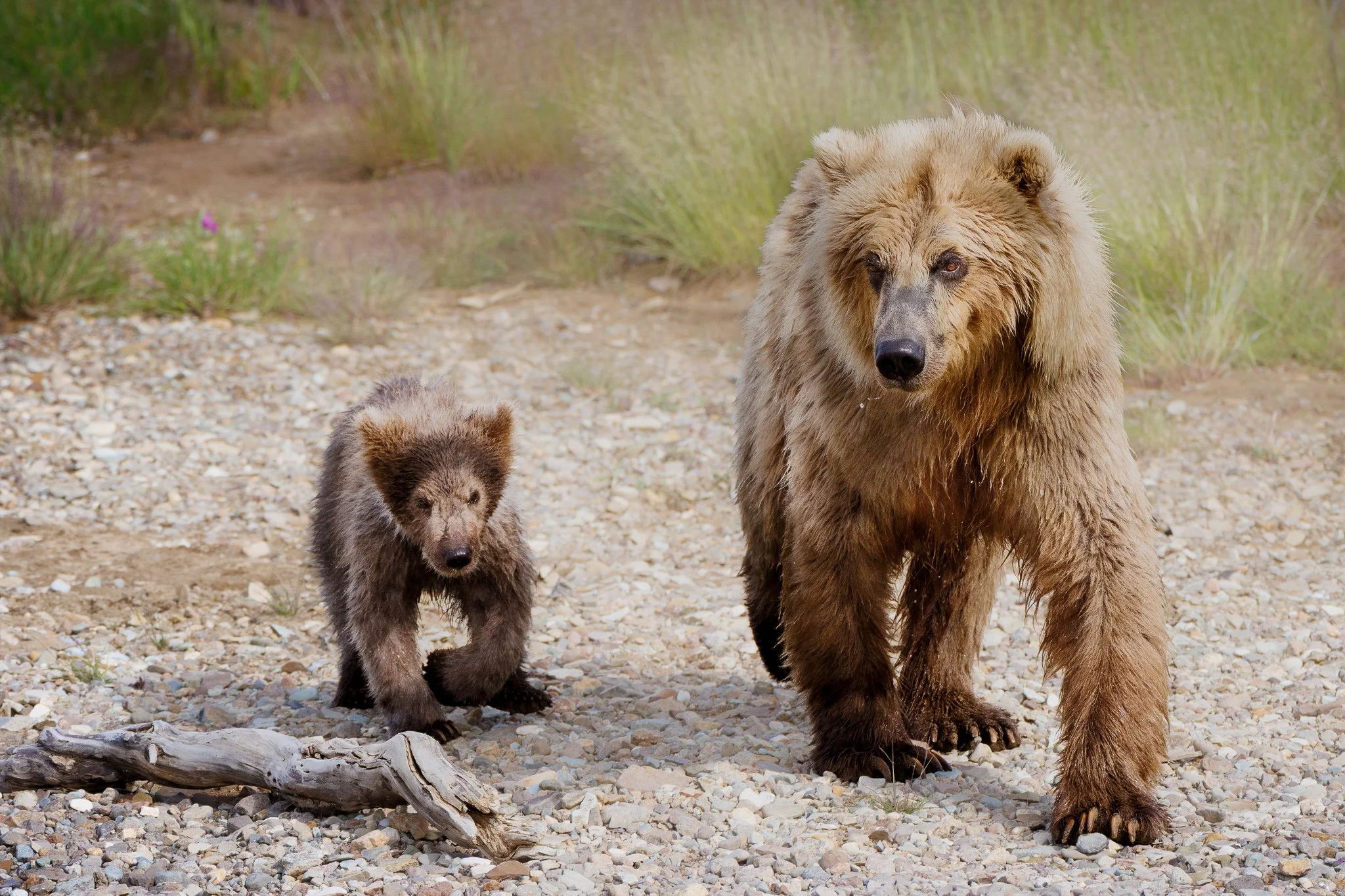
Moments like this exist only because the delicate balances still hold—the salmon returning, the river moving, the bear finding what it needs.
Take away any part of that, and the whole story falters.
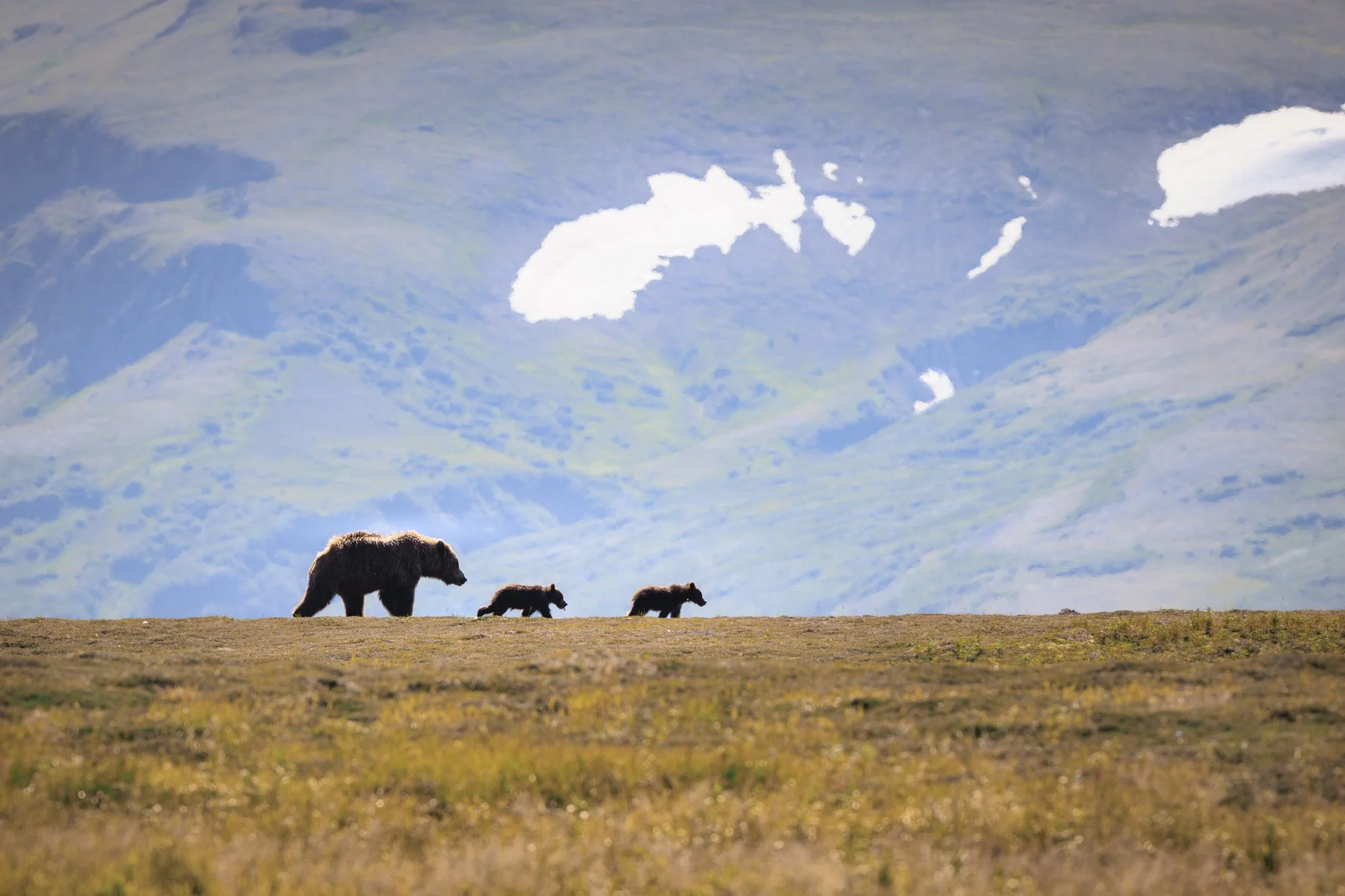
There is something about watching a bear family cross that landscape that settles into you.
A quiet reminder of what it takes for them to survive…
what they’re walking toward…
and how much of it could so easily be lost.
And seeing those cubs move through the world with that mix of curiosity and innocence shifts my thoughts forward—toward the generations who will come after me and the world they’ll inherit.
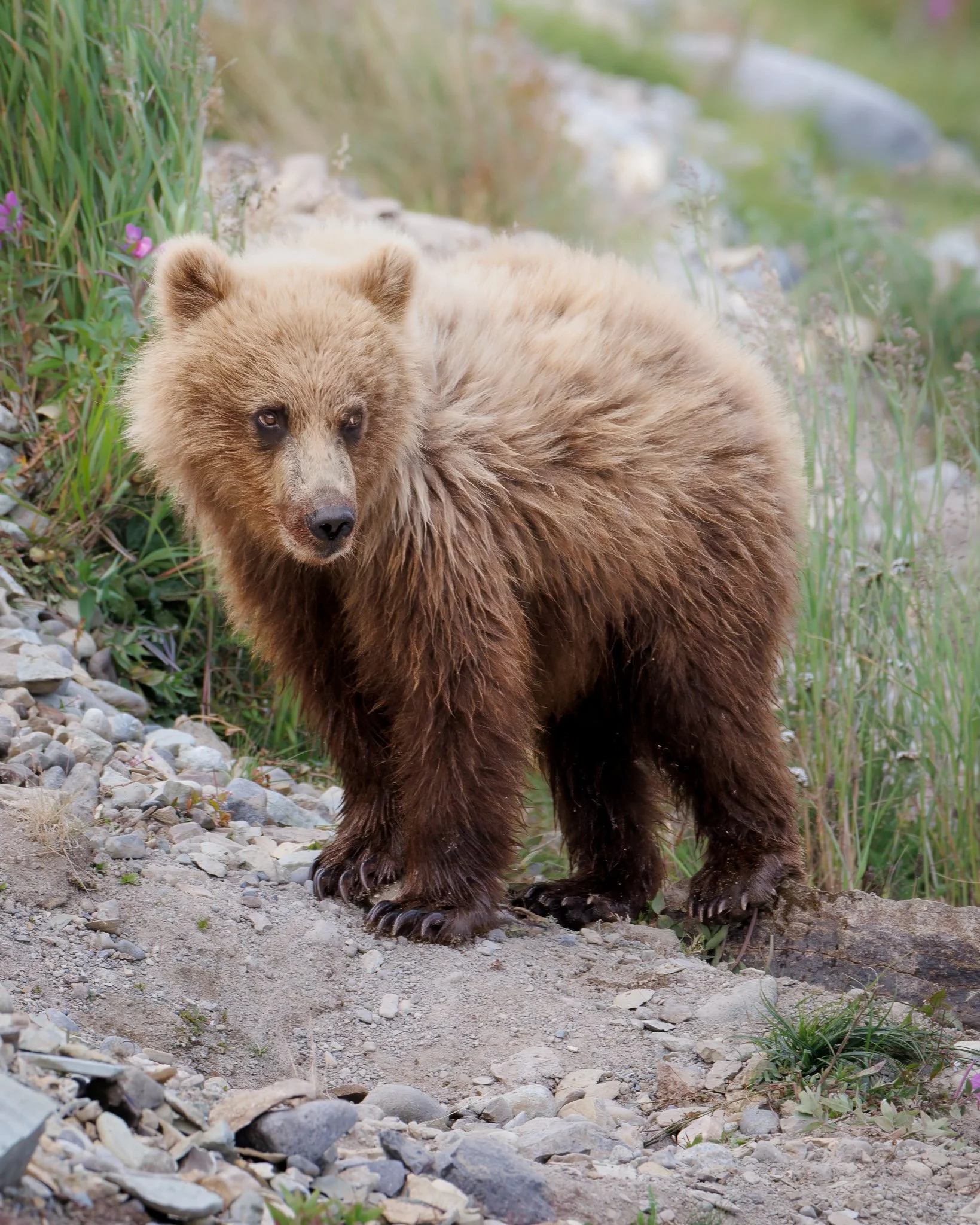
Whether the wild they are learning to navigate will remain the same…
and whether those who follow will ever stand here and feel even a fraction of this wonder…
I think about that often.
The smallest lives remind us how much there is still worth holding close.
Maybe that’s why these moments stay with me.
They remind me what’s worth noticing…
what’s worth holding onto…
and what’s worth protecting while we still can.
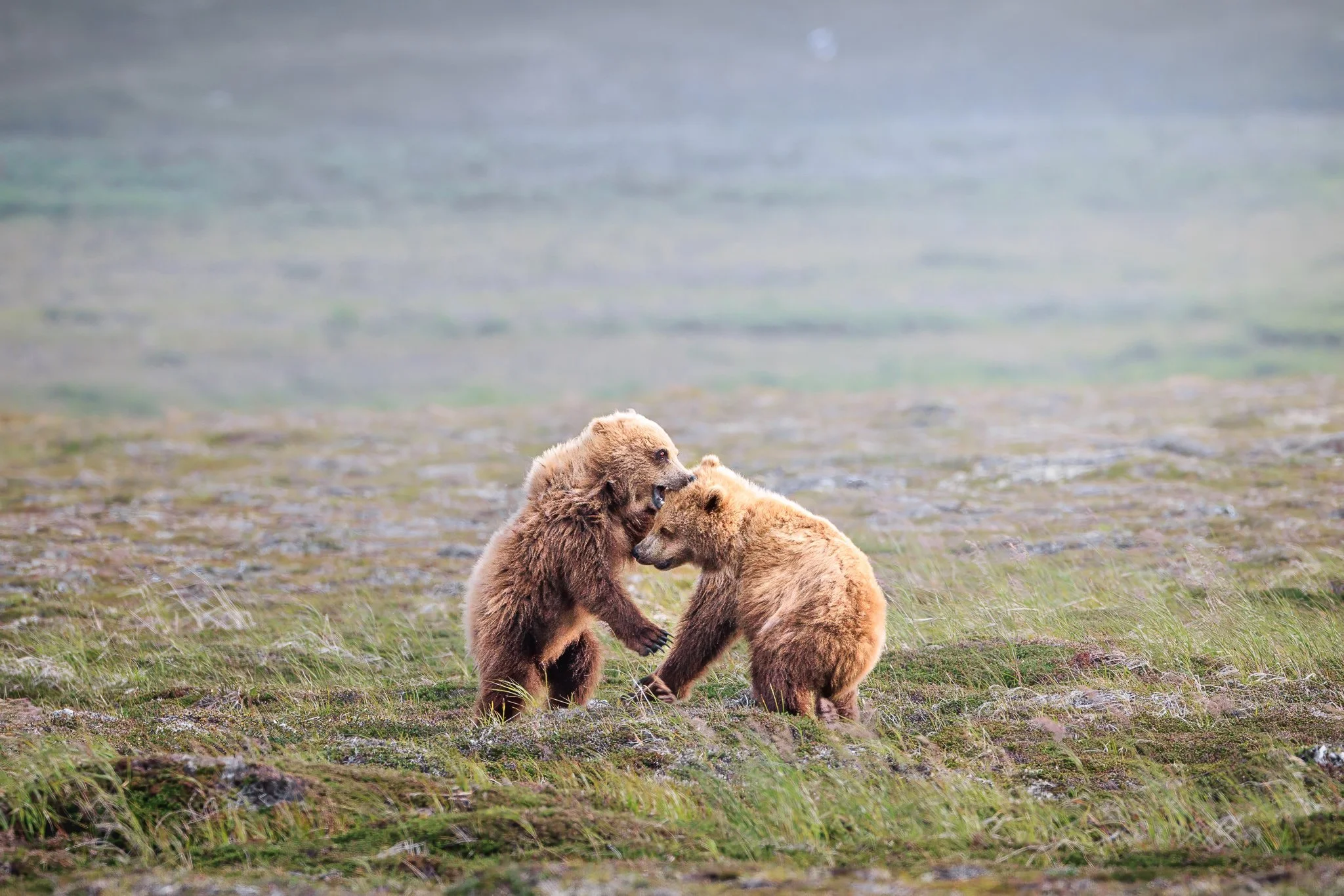
Because in the end, it’s the smallest things that remain.
Locking eyes with a wild bear.
The sound of water moving past your boots.
A rustle in the grass.
The soft grunt of a cub wrestling with its sibling.
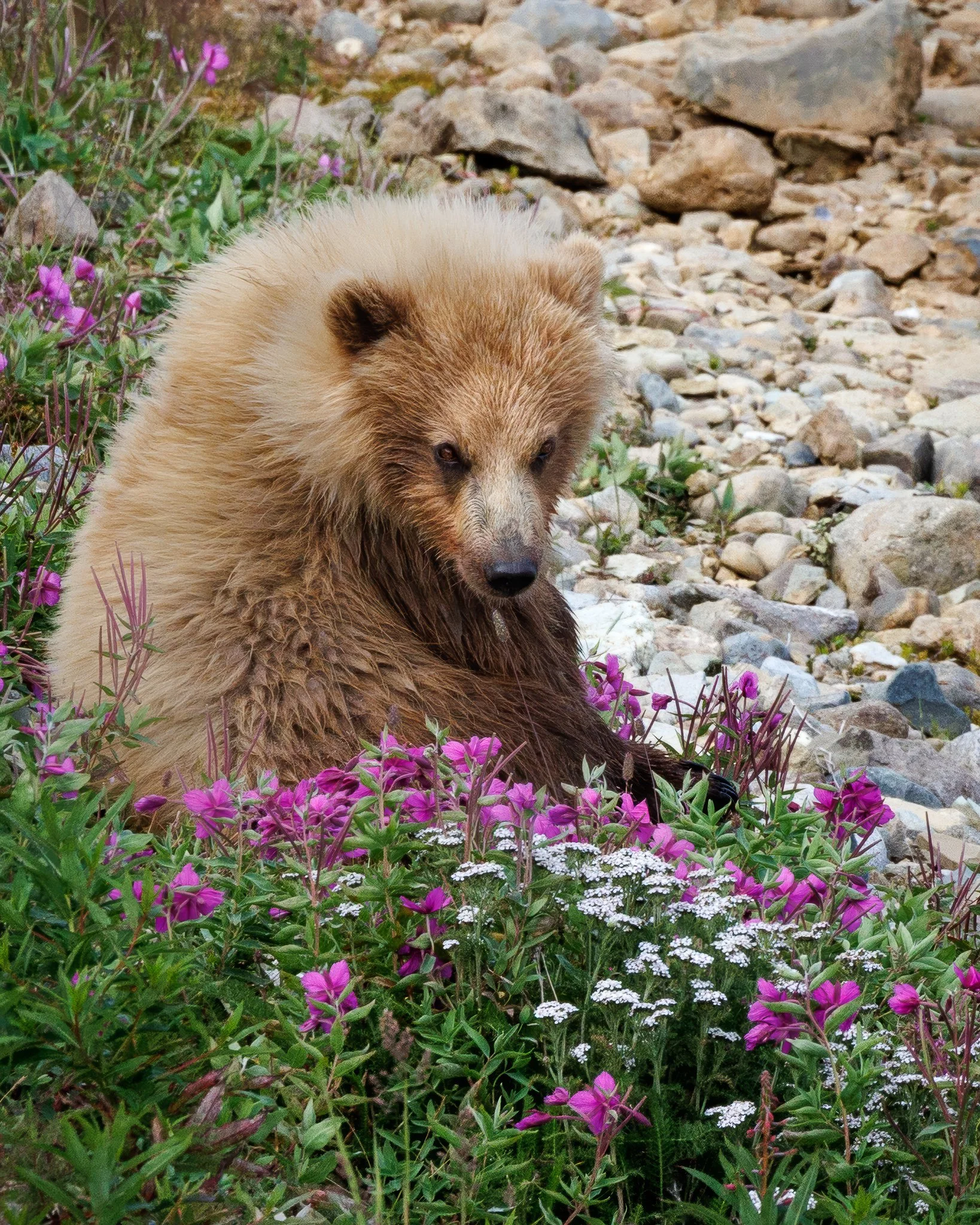
If my images do anything, I hope they open a small window into what’s at stake.
A quiet reminder of why showing up matters.
Why paying attention matters.
Why protecting the wild matters—just a little more than it did before.
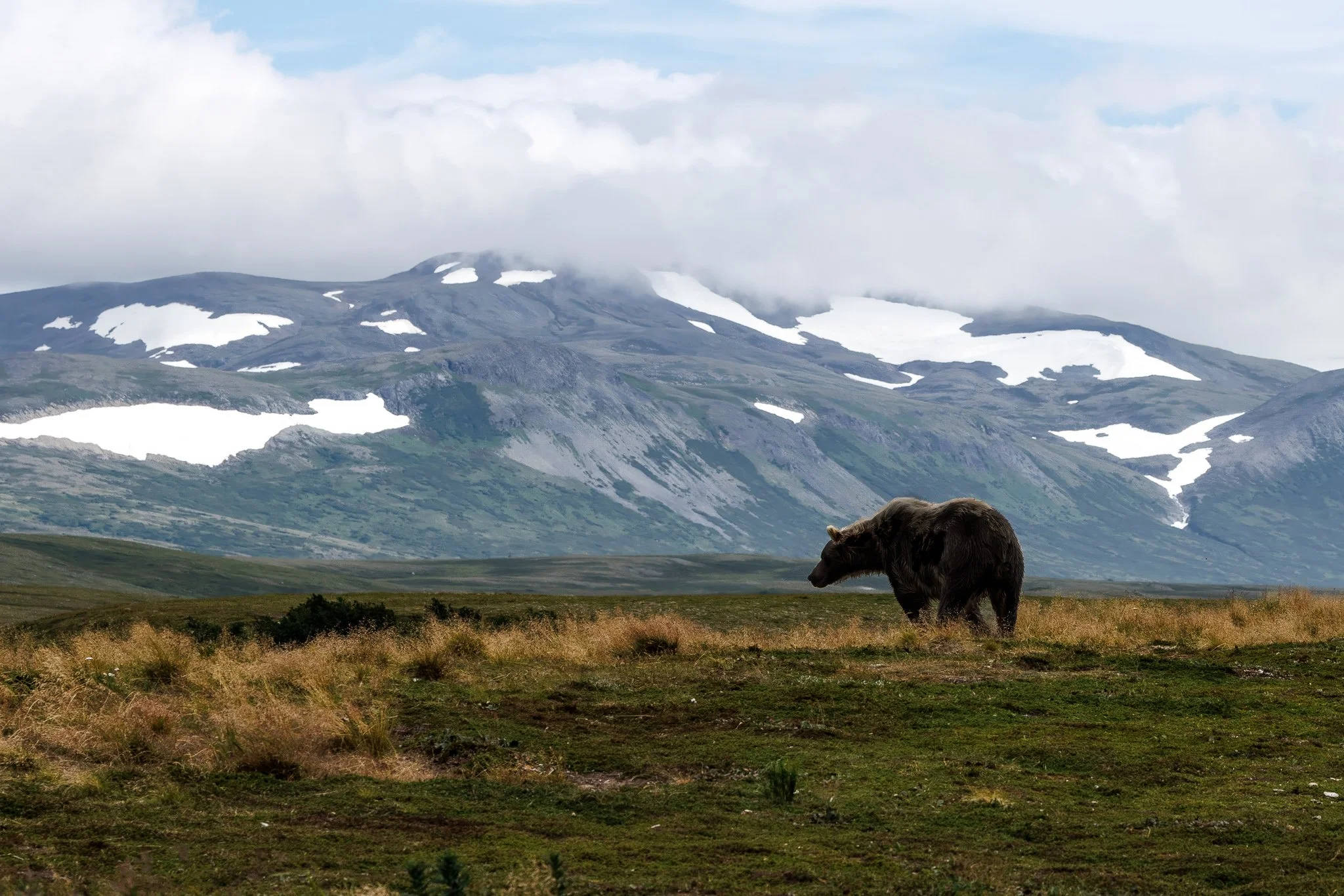
(This piece is part of an ongoing collection of travel journals from wild places—where each experience is shaped as much by what is felt as what is seen.)
If you’d like to know how I ended up here — this is a bit of my story.